The Unwritten Rules of Dropping Into a BJJ Gym
Everything you need to know before your next BJJ drop-in.
One of the things that makes Brazilian Jiu-Jitsu unique is that, no matter where you are in the world, there’s a very good chance you’ll find a gym to welcome you onto the mats. Whether you’re travelling for work, on holiday, or simply passing through another city, dropping into a new academy is one of the best ways to experience different BJJ cultures. That openness, however, comes with an understanding. Every academy has its own culture, routines and expectations, and as a visitor it’s your responsibility to adapt to them. If you’re planning to visit a new BJJ gym, these are the unwritten rules worth knowing before you step onto the mats.
Tip 1
Arrive on Time
Being punctual is one of the simplest ways to show respect for the academy you’re visiting.
Aim to arrive ten or fifteen minutes before class begins. That gives you enough time to sign any waivers, pay the mat fee, get changed and introduce yourself without feeling rushed. It also gives the coach an opportunity to explain any academy-specific rules before the session starts.
Turning up halfway through warm-ups or after the technique has already been demonstrated immediately puts attention on you for the wrong reasons. More often than not, the coach won’t be keen to stop the class and explain the technique again just because you arrived late, so you’ll either spend the rest of the session trying to catch up or have to rely on your training partner to fill in the gaps.
Tip 2
Turn Up Clean
Good hygiene isn’t an optional in this sport. It’s one of the most basic responsibilities every grappler has towards their training partners.
Before arriving, make sure your training gear has been washed, your fingernails and toenails are trimmed, and you’ve showered if necessary. If you’ve got cuts, cover them properly, and if you’re dealing with a contagious skin infection do not train!
Tip 3
Wear the Right Gear
Not every academy has the same expectations when it comes to what you wear.
Some gyms ask visitors not to wear another academy’s patches. Others require ranked rashguards or have rules about colours. Most are happy to accommodate visitors, but it’s always worth checking beforehand rather than making assumptions.
Tip 4
No Bare Feet Off the Mats
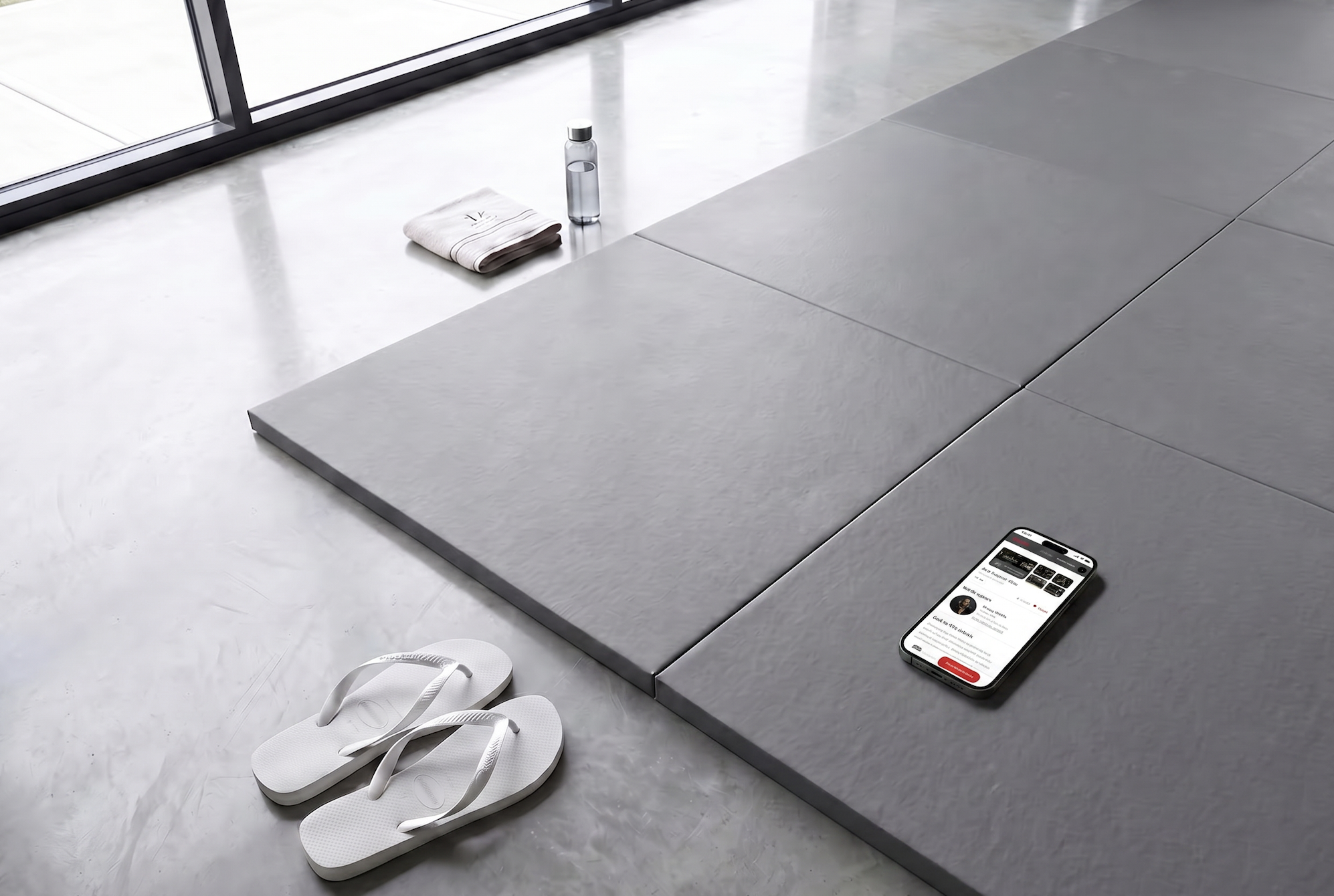
You’ll struggle to find a BJJ academy that isn’t strict about keeping the mats clean, and for good reason. One of the easiest ways to help is by bringing a pair of flip flops or slides with you.
If you don’t have flip flops with you, the principle remains the same, never walk around off the mats barefoot. Always put some form of footwear on before stepping into changing rooms, bathrooms or other communal areas, then take it off again before returning to train.
It might seem like a small detail, but it’s one of the simplest ways to reduce the amount of skin infections.
Tip 5
Introduce Yourself to the Coach
When you arrive, make a point of introducing yourself to the coach before class starts. Tell them your name, where you’re visiting from and your belt rank. If you’re travelling for work or on holiday, mention that too. It gives the coach some context and lets them know who’s on the mats.
While you’re waiting for class to begin, introduce yourself to a few of the people around you as well. BJJ has a welcoming community, and a quick conversation before training makes it much easier to settle into a new room. You’ll often find yourself chatting between rounds or after class too.
As a general rule, address the instructor as “Coach” unless they tell you otherwise. Different academies have different preferences, but “Coach” is almost always appropriate and shows a simple level of respect when you’re visiting someone else’s gym.
Tip 6
Don’t Film Without Permission
Before reaching for your phone, ask first.
Some gyms actively encourage filming, while others have a strict no-camera policy. Even if the academy is happy for you to record, the people around you may not want to appear on social media. Taking a few seconds to ask permission avoids awkward situations and shows respect for both the coach and your training partners.
Tip 7
Learn the Gym’s Leg Lock Rules
Not every academy follows the same approach when it comes to leg locks.
Some gyms allow heel hooks in every round. Others reserve them for advanced classes, while some prefer a touch-and-go approach where submissions are recognised but not finished. Assuming every room follows the same rules as your home academy is an easy way to create unnecessary problems.
If you’re unsure, ask the coach before sparring. They’ll be able to explain any academy-specific rules or expectations. As a general rule of thumb, especially when rolling with someone you’ve never trained with before, a hold-and-release approach is usually the safest option. If you enter a leg entanglement such as the saddle position, establish the position and demonstrate control. If your training partner doesn’t appear to understand the position or the danger they’re in, give them a moment to recognise it before releasing the hold and moving on to your next attack. There’s no need to wait for a tap. It’s an effective way to train leg locks while dramatically reducing the risk of unnecessary injuries, particularly when you’re rolling with people whose experience and knowledge you don’t yet know.
Tip 8
Match Their Energy
Rather than trying to dictate the pace from the opening exchange, spend the first few moments of each roll being reactive. Use that time to get a read on your partner’s level, how they like to train and what their intentions are for the round. Once you’ve got a feel for that, match their intensity.
If they start rolling harder than you’re comfortable with, don’t feel like you have to match them. A simple, “Can we keep it technical?” is perfectly acceptable. Most training partners will dial it back immediately. Many unnecessary injuries happen because neither person says anything and the intensity quietly escalates until someone gets hurt.
If you’re one of the more experienced grapplers in the room, resist the temptation to submit lower belts over and over again simply because you can. Let them work, give them realistic reactions and make it a productive round for both of you. Nobody enjoys being steamrolled by a visitor, and if that’s the impression you leave, don’t be surprised if people stop choosing you for rounds (including the coach).
To conclude, drop-in etiquette isn’t about following a list of unwritten rules for the sake of it. It’s about making the session enjoyable for everyone in the room, from the coach running the class to the training partners you’re sharing the mats with.
Every academy has its own culture, but the principles are largely the same. Arrive prepared, respect the gym’s rules, communicate with your training partners and train with control. A little consideration goes a long way, and it helps create the kind of environment that makes Brazilian Jiu-Jitsu so unique.
Whether you’re visiting a world-class competition academy or a small local gym, being a good training partner will always matter more than how many submissions you get.