Gi vs No-Gi: What's the Difference, and Which Should You Train?
It's one of jiu-jitsu's defining modern debates, and something that was once almost sacrilege to even bring up now feels like it's settling in one direction.
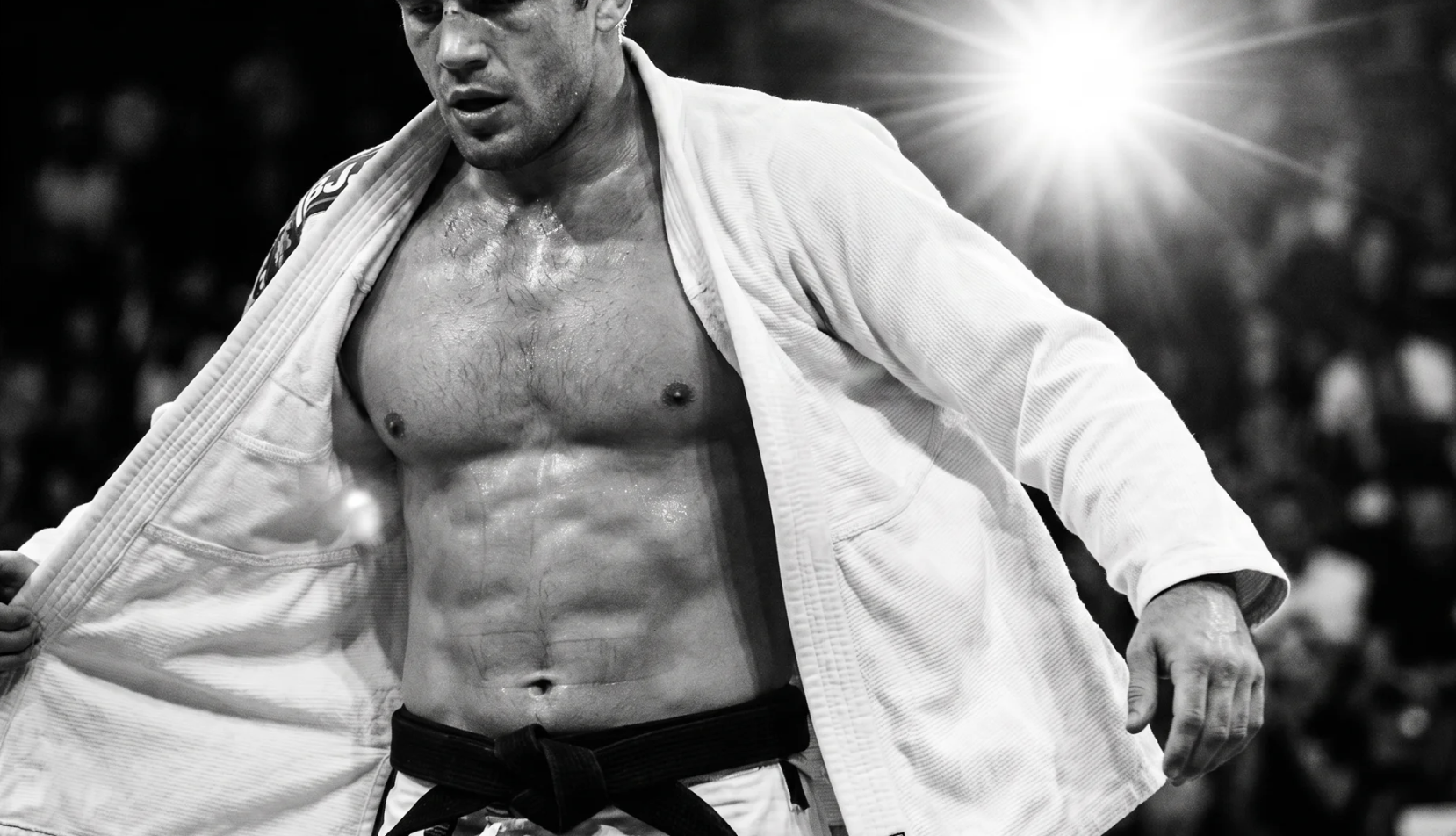
The Gi still has its die-hards, though, and they've got a point. So before you pick a side, it's worth knowing where each one came from, what they're actually good for, and which is worth your time on the mats.
How No-Gi was born
The Gi was BJJ's original form. It's what Hélio Gracie and his family built the art around, and for years it was simply what jiu-jitsu was known for. But No-Gi was never far away. Jiu-jitsu made its name on the beaches of Rio, where Rickson and his brothers built a reputation in challenge fights, and on the vale tudo stage. Both were fought without the Gi, so the Gracies were training in the kimono but competing without it.
No-Gi grew into its own sport later. ADCC lit the fuse in the late 90s, throwing wrestlers, judoka, sambo and BJJ players into one arena without the Gi. Then Eddie Bravo took it further with 10th Planet, a system taught entirely without the Gi, and his win over Royler Gracie at ADCC 2003 made the point for him: you could reach the top without training in the Gi.
The case for the Gi
The Gi is where a lot of people build their actual technique. Because there's so much to hold onto, control is easier and the pace is slower, which gives you time to think, set things up and genuinely learn what you're doing. It opens up a whole world of grip-based attacks too, collar chokes, sleeve and lapel control, spider guard, that simply don't exist without the jacket.
It also makes you tougher to beat. When your opponent can grab your collar and slow you right down, you can't just muscle or scramble your way out of trouble, you have to solve the problem properly. That's why plenty of coaches will tell you the Gi builds the stronger base. It forces you to be technical, because athleticism alone won't save you.
The Gi is also just physically brutal. Fighting off grips is exhausting, you burn through your tank prying hands off your collar and sleeves, and the jacket traps so much heat you cook while you do it. It's why someone who spends a year training nothing but No-Gi will gas out a couple of minutes into a Gi round when they come back. The friction, the heat, the sheer power of the grips, none of it is a joke, and readjusting to it takes a while.
The case for No-Gi
No-Gi is faster, sweatier and, for a lot of people, more fun. With nothing to grab, you can't stall the game the same way, so it rewards speed, timing, wrestling and body-lock control instead of fabric. It's also closer to a real fight, since nobody's guaranteed to be wearing a jacket you can grip, which is a big part of why No-Gi is what you see in MMA.
It's also where the sport is exploding right now. A lot of No-Gi rulesets open things right up, heel hooks and the whole leg-lock game are fair play, and with more submissions on the table it simply feels freer and more attacking. Wrestling counts for more, too, since getting on top and holding someone there is far harder without grips to slow them down. Shows like ADCC have pushed all of it to a seriously high level, and if you like scrambles, pace and a more athletic style, No-Gi will probably be the one that hooks you.
And let's be honest, there's a lot less laundry and you won't miss the swollen knuckles.
Which is the best for the street?
The Gi gets underrated here. For a big chunk of the year people are wrapped up in jackets, hoodies and denim, and Gi grips transfer straight onto that clothing. A bow and arrow or a collar choke works just as well on a hoodie as it does on a kimono, and grabbing a sleeve or a lapel hands you a lever to drag a bigger, panicking attacker off balance and dictate where things go. That control is the whole point, it lets a smaller person steer someone stronger.
However, No-Gi is faster and more adaptable, and it doesn't lean on your attacker wearing anything you can grab. Real fights are messy and quick, clothing tears, grips slip, and a t-shirt or a vest gives you next to nothing to hold, so training without that crutch keeps you sharp for when there's nothing there. It's closer to the chaos of an actual scrap, the scrambles, the wrestling, the explosiveness, and it leans on control and takedowns that work whatever the other person happens to be wearing.
So which one should you train?
If you're starting out, do the Gi, at least until blue belt. The slower pace and all those grips force you to actually learn, and grinding through the fabric builds a base and a level of conditioning that carries into everything else, No-Gi included. Get that foundation in first and the rest comes a lot easier. There's a novelty to it early on, as well. Tying the belt, looking the part, it's genuinely part of the fun when you start out, right up until your belt comes undone for the fourth time mid-roll and you're lugging a soaking wet Gi home in your bag after every session. After that, ideally, you train both. They make each other better, and the best grapplers borrow from both. That said, there's no ignoring which way things are trending. No-Gi has the momentum right now, driven by the big-money competition scene like ADCC and CJI, the faster, more explosive style, and the fact it's just less hassle all round. More and more people are leaning that way, and it's been building for a while.
Gi or No-Gi? Only one way to find out
Book a drop-in today
No membership, no commitment
Search classes on DOJOTAP →